Abstract
This article examines whether the concentration of capital and political power is a uniquely American phenomenon or a general tendency of capitalist development worldwide. Drawing on classical political economy, empirical studies of wealth distribution, and comparative country cases, the analysis demonstrates that economic and political inequalities are structurally embedded in capitalist accumulation. It also contrasts trajectories in the United States, Iran, and China to show how institutions and state strategies mediate the speed and form of inequality.
1. Structural Foundations of Rising Inequality in Capitalist Economies
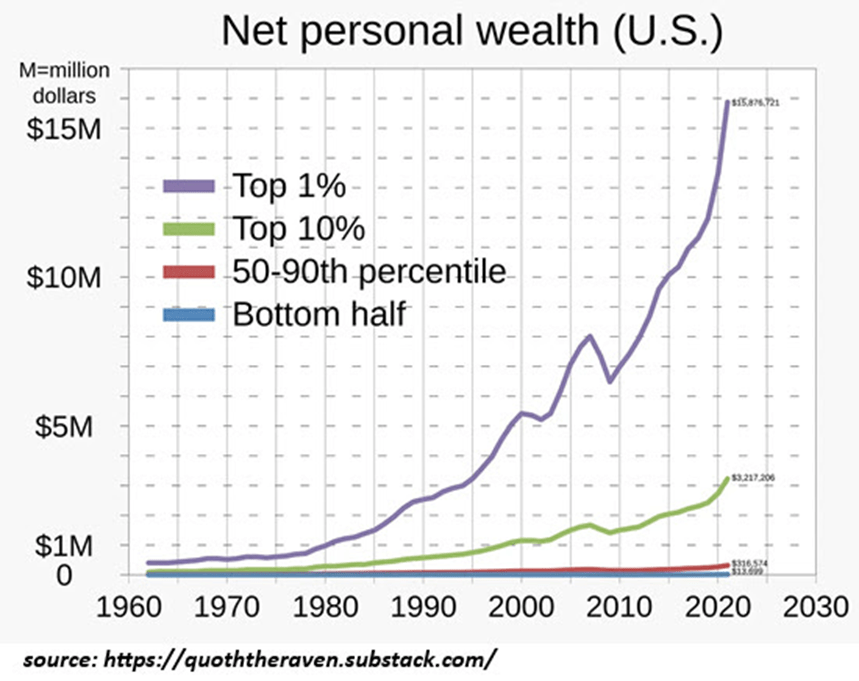
Extensive scholarship demonstrates that modern capitalist economies tend toward increasing concentration of wealth and income (Piketty 2014; Milanovic 2016). Two mechanisms are central to this process:
1.1 Concentration of Capital
Classical and contemporary political economists have emphasized the tendency of capital to accumulate and compound over time. Marx described this process as “the accumulation of capital” and “the concentration of the means of production” (Marx 1867). Later empirical work confirms that returns to capital often exceed the growth rate of the real economy (Piketty 2014), resulting in exponential expansion of wealth among capital-owning classes.
1.2 Centralization of Capital (Mergers and Acquisitions)
The second mechanism, identified by Marx as “centralization,” refers to the absorption of smaller firms by larger ones (Marx 1894). In the contemporary era, corporate mergers and acquisitions have intensified, reducing market competition and consolidating economic power (Stiglitz 2012; Philippon 2019). This dynamic is evident in rising market concentration across technology, finance, energy, and consumer goods sectors.
2. Political Inequality as a Reflection of Economic Inequality
Political inequality closely follows economic concentration. Elite influence over policy outcomes, campaign finance, and legislative priorities is well documented (Domhoff 2014; Page & Gilens 2017). Page and Gilens (2014) find that ordinary citizens have almost no independent impact on US policy outcomes, while economic elites and organized business interests wield substantial influence.
This pattern is not unique to the United States. Winters and Page (2009) argue that “oligarchic politics”—the disproportionate political influence of the wealthy—is a global feature of high-inequality capitalist systems. The political activities of billionaires such as Elon Musk or Bill Gates exemplify how extreme wealth translates directly into political agenda-setting power.
Historically, state interventions have moderated inequality only during exceptional periods, such as Franklin D. Roosevelt’s New Deal reforms (Katznelson 2013), including minimum wage in 1938. These interventions temporarily reversed inequality by regulating finance, empowering labor, and expanding welfare institutions.
3. The Neoliberal Era and the Acceleration of Inequality
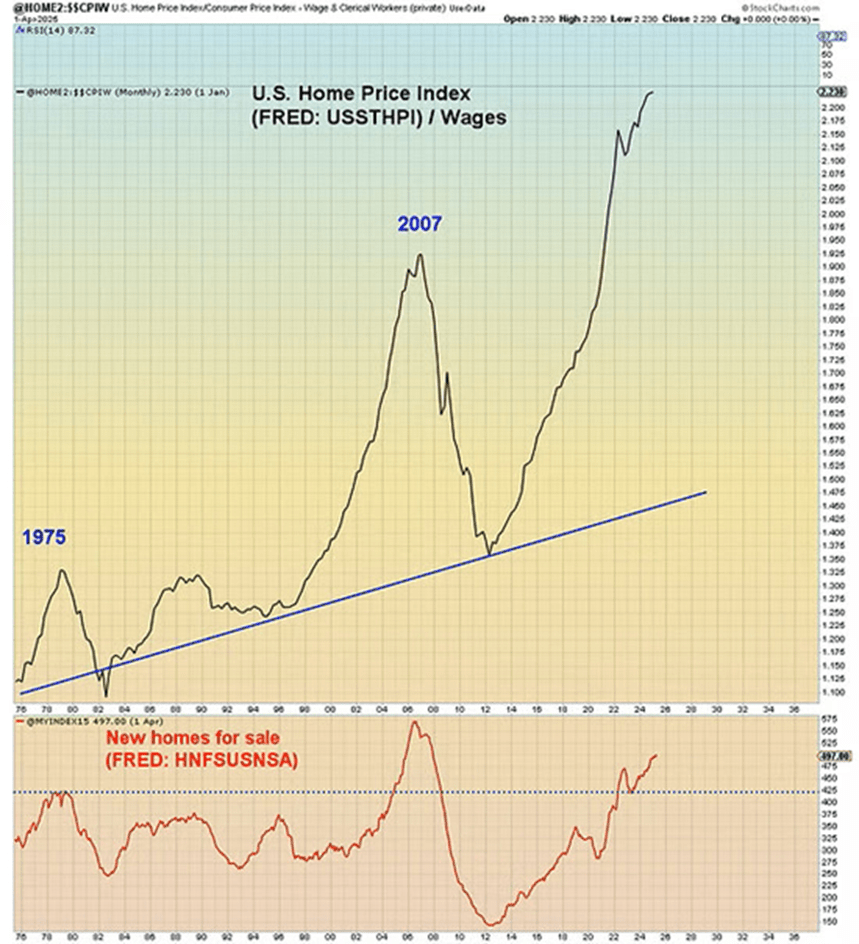
Beginning in the late 1970s and early 1980s, advanced capitalist states—most notably the United States and United Kingdom—shifted toward neoliberal policies emphasizing deregulation, privatization, tax reductions for capital, and weakening of labor protections (Harvey 2005). Several policy changes were especially consequential for inequality:
3.1 Deregulation and the Erosion of Worker Protections
Neoliberal reforms reduced labor bargaining power, not raising minimum wage to keep up with inflation, and deregulated industries, contributing to wage stagnation and rising poverty (Hacker & Pierson 2010).
3.2 Legalization of Corporate Stock Buybacks (1982)
The Reagan administration’s reinterpretation of SEC Rule 10b-18 effectively legalized stock buybacks, transforming them into a dominant mechanism for increasing share prices without increasing productive output or creating any value (Lazonick 2014).
3.3 Privatization of Retirement Savings
The shift toward market-based retirement plans, such as 401(k)s, TIAA-CREF, channeled workers’ savings into financial markets, contributing to inflated stock prices while exposing workers to financial risk (Hacker 2019).
3.4 Expansion of the Military–Industrial Complex
Persistent increases in defense spending and continuous military engagements redirected public funds into private defense firms. Scholars argue that the modern defense sector operates as a structurally entrenched “permanent war economy” (Melman 2001; Bacevich 2010).
These neoliberal dynamics significantly accelerated the concentration of capital and political power.
4. Case Study: Iran — Post-Revolutionary Inequality and Neoliberal Transformation
Iran represents a paradoxical yet illustrative case. Despite the 1979 Revolution’s explicit rhetoric of social justice and protection of the Mostazafan (the oppressed), inequality has increased substantially. Scholars note that under President Rafsanjani (1989–1997), Iran adopted extensive and market-oriented reforms comparable to global neoliberal trends (Harris 2017; Maljoo 2020).
4.1 Privatization and Elite Accumulation
State assets were privatized, often through non-transparent processes that allowed politically connected elites—particularly those linked to state institutions, the clergy, and Guard—to acquire significant wealth (Keshavarzian 2007).
4.2 Financial Sector Expansion and Corruption
Iran’s rapidly expanding banking and finance sector facilitated lending scandals, mortgage crises, and institutional corruption, contributing to wealth concentration within elite networks (Salehi-Isfahani 2017).
4.3 Sanctions and Informal Oil Markets
US sanctions created lucrative opportunities for illicit or semi-regulated oil sales. Because these transactions were not fully reportable, large shares of oil revenue remained outside the formal state budget and were captured by military and political actors (Alamdari 2005).
Thus, despite anti-capitalist revolutionary ideology, Iran witnessed extreme capital accumulation by ruling elites.
5. Case Study: China — Mitigating Inequality Through Poverty Elimination
China presents a contrasting path. While its market reforms produced rising inequality during the 1980s–2000s (Xie & Zhou 2014), the state has maintained strong capacity to intervene in distributional outcomes. In 2021, China officially declared the eradication of rural poverty—a claim supported by independent assessments (World Bank 2021; Wang & Weaver 2022).
China’s state-led development strategy includes:
- substantial public investment in rural infrastructure,
- universalization of basic education and healthcare,
- strict controls on land ownership,
- and targeted poverty alleviation programs (Ravallion 2021).
While inequality persists, China has effectively eliminated destitution at the bottom of the distribution, in sharp contrast to the deepening poverty observed in many capitalist economies.
Conclusion
The concentration of capital and political power is not a phenomenon confined to the United States. It is a structural feature of capitalist development, observable across advanced, emerging, and hybrid economies. Comparative evidence from Iran and China illustrates that the pace and form of inequality are mediated by national institutions and state strategies, but the underlying dynamics remain global. Only deliberate and sustained state interventions—such as the New Deal or China’s poverty-elimination campaigns—have demonstrated the capacity to counteract these long-term tendencies.
Mohamad Shaaf, MBA, PhD,is Emeritus Professor of Economics at the University of Central Oklahoma. He is an empirical research analyst whose scholarly work spans a wide range of economic issues, employing Artificial Intelligence, dynamic programming, and advanced econometric modeling. His publications appear in numerous professional journals, and his scholarly record can be accessed via Google Scholar under “Mohamad Shaaf.” He can be reached at mshaaf@uco.edu or drshaaf@gmail.com.
References
Alamdari, K. (2005). The power structure of the Islamic Republic of Iran. Third World Quarterly.
Bacevich, A. (2010). Washington Rules: America’s Path to Permanent War.
Domhoff, G. W. (2014). Who Rules America?
Hacker, J. (2019). The Great Risk Shift.
Hacker, J., & Pierson, P. (2010). Winner-Take-All Politics.
Harvey, D. (2005). A Brief History of Neoliberalism.
Harris, K. (2017). A Social Revolution: Politics and the Welfare State in Iran.
Katznelson, I. (2013). Fear Itself: The New Deal and the Origins of Our Time.
Keshavarzian, A. (2007). Bazaar and State in Iran.
Lazonick, W. (2014). “Profits Without Prosperity.” Harvard Business Review.
Maljoo, M. (2020). “Neoliberalism in Iran.” Middle East Critique.
Marx, K. (1867, 1894). Capital, Vols. I–III.
Melman, S. (2001). After Capitalism: From Managerialism to Workplace Democracy.
Milanovic, B. (2016). Global Inequality.
Page, B., & Gilens, M. (2014). Testing Theories of American Politics.
Page, B., & Gilens, M. (2017). Democracy in America?
Philippon, T. (2019). The Great Reversal.
Piketty, T. (2014). Capital in the Twenty-First Century.
Ravallion, M. (2021). “Has China Eliminated Extreme Poverty?” Journal of Economic Perspectives.
Salehi-Isfahani, D. (2017). “Poverty and Inequality in Iran.”
Stiglitz, J. (2012). The Price of Inequality.
Wang, X., & Weaver, C. (2022). “Assessing China’s Poverty Eradication.”
Winters, J., & Page, B. (2009). “Oligarchy in the United States.”
World Bank. (2021). China Poverty Assessment.
Xie, Y., & Zhou, X. (2014). “Income Inequality in Today’s China.” PNAS.


One thought on “The Global Concentration of Capital and Political Power: Structural Dynamics and Comparative Cases”