Author: Mohamad Shaaf,Published in Information Clearing House,2019/10/19
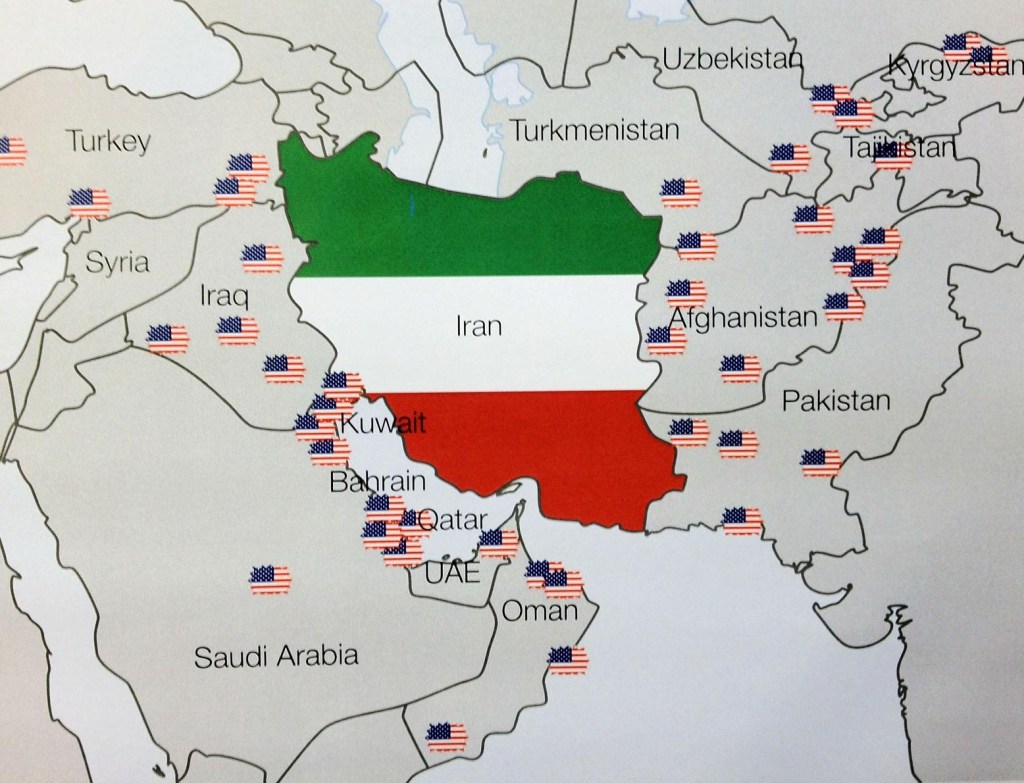
This essay explains the evolutionary process as the Islamic Republic of Iran (IRI) moved from a weak regional power, through gradual and exponential growth and assertiveness, to test the US power as demonstrated by recent challenges. This progression occurred because the US situated multiple strategic interests in the area, effectively disabling itself; the US is now unable to mount a military response to actions by Iran. The recent reversal has had an impact on the world balance of power, confirming another failure of the neocons’ doctrine of Full-Spectrum Dominance and validating the emergence of a new multi-polar world.
A Brief History of IRI: The IRI was created in December 1979 as a theocracy, founded by Ayatollah Khomeini, and succeeded by Ayatollah Khamenei. The IRI government setting and economic structure were unique and unparalleled in the modern world. In the early months of the upheaval, the idea was appealing to many Muslims worldwide. Over time, with the structural, economic, political, and social changes that took place, the appeal declined. Naturally, it polarized Iranian people into two extremes, supportive and hostile, to the IRI, which divides individuals by class, wealth, education level, geography, and even families. However, this divide is qualitatively different in the sense that supporters are much more passionate than those in the opposition.
The IRI’s dynamics have evolved to an increasing oil dependency by the government and the country, a bloated governmental budget, corruption, capital flight, hostility and economic sanctions, and maximum pressure of all types by the US. The IRI’s popular support has been declining until recently, when many switched to support for the government as Iran was faced with the existential threat of war of all forms, including nuclear and the one Tehran called “economic terrorism” by the US. It might come as a surprise to readers that many Iranians believe the IRI was created and imposed on the Iranian people by the CIA and the deep state as a strategic measure against the Soviet Union. There are several reasons for this claim.
First, the ideological compatibility of capitalism and the Muslim clergy as zealous anti-communists, indicated by their historical records, was promoted by the CIA and financed by Saudi Arabia worldwide. Second, the same regime-change model was used to topple the pro-Soviet government in Afghanistan on August 5, 1979. Likewise, recent support of the “moderate opposition” used to topple governments in Libya and Syria support that claim. Third, the contingency plan to replace the Shah with a theocracy started in the 1960s when the CIA advised him to expand Muslim ideology through building more mosques all over Iran, with networks of clergy used as anti-communist fanatics. This CIA pursued the same policy in many other countries with the financial support of the Saudis, including Afghanistan, Chechnya in Russia, China, and many others, as indicated in the video Oil, Arms, and Militant Muslim Wahhabism is the Basis of US-Saudi Relationship.
Fourth, Richard Helms was appointed Ambassador to Iran (1973-1977), coinciding with the Arab oil embargo in 1973. He established a strong working relationship with the Shah, including the installation of spy equipment to monitor the USSR, while keeping the Shah’s terminal prostate cancer a secret from everyone. One year after Helms left Iran, in 1978, street uprisings started that led to the creation of the IRI in 1979. Fifth, during the uprising against the Shah in 1978, General Huyser had a secret mission to Iran, without the knowledge of the Shah, to make their military “neutral”, resulting in de facto support for the IRI that terminated the Shah’s rule in 1979. Sixth, the Carter administration had extensive contacts, agreements, and pledges with Ayatollah Khomeini that suggest the Carter administration paved the way for Khomeini to come to power; although the media reported the CIA did not predict the revolution. Interference cannot be proved because the CIA report has not been declassified, although it passed the 25-year requirement. Seventh, the American Hostage Crisis facilitated the passage of the referendum on the theocratic Constitution of IRI and was used by the 1980 Reagan-Bush Campaign, through secret negotiations with Khomeini to keep the hostages, to cause President Carter to lose the election.
A Brief History of US Hostility against Iran: Since the IRI took over in 1979, the US has been involved in overt and covert hostility against that government. In 1977, President Carter started a campaign of human rights, which led to the release of political prisoners by the Shah and his SAVAK. It was followed by a massive popular uprising against the Shah, who was told by Washington to leave Iran, resulting in the creation of the Islamic Republic. On November 4, 1979, militant Iranian students seized the U.S. embassy in Tehran. Iran’s leader, Khomeini, refused all appeals to release the hostages, even after the UN Security Council demanded an end to the crisis. In response, President Carter ordered the freezing of Iranian assets and banned Iranian oil imports. The IRI kept 52 captives in the American Embassy for 444 days, releasing them on President Reagan’s Inauguration.
In September 1980, the US gave the green light and weapons in support of Iraq’s invasion and war against Iran; weapons were also sold to Iran indirectly through Iran-Contra and Israel. According to the American Senate Banking Committee, the administrations of Presidents Reagan and George H. W. Bush authorized the sale to Iraq of poisonous chemicals and deadly biological viruses, such as anthrax and bubonic plague, to be used against Iran.
On July 3, 1988, a US warship shot down an Iranian passenger plane, killing all 290 people, to force Iran to accept the UN-brokered ceasefire that was accepted in August 1988. The number of casualties of the Iran-Iraq War was enormous, but the numbers are uncertain. Estimates of total casualties ranged from 1M to 2M, with Iran suffering the most losses.
In 1989, when the USSR collapsed and fear of communism declined, Islamic Iran lost its value as a counterforce against communism. As a consequence, pressures on Iran that started under G.H.W. Bush and continued under Clinton showed a steady increase; after 9/11, the threat of a new and higher level ofmilitary invasion of Iran began, using the threat “all options are on the table,” including nuclear, which started in 2001 during the administration of G. W. Bush, as confirmed by General Clark. The policy continued during the Obama and Trump administrations.
The Joint Comprehensive Plan of Action (JCPOA), called the Iran Nuclear Deal, which was agreed upon by Obama in 2015, did not remove the agreed-upon sanctions, and the withdrawal from that agreement by Trump resulted in more sanctions being added. The value of IRI as an anti-communist state declined further, as reflected by Trump insulting the Supreme Leader, which had never before happened.
Major Signs of a more Assertive Iran: Starting in 2012, the Iranian military sent advisors, and later troops, to Syria with support from Russian air cover to stop the US-trained, Saudi-financed terrorists’ aggression against the elected government of Syria. The operation was successful in that it showed the possibility that Obama’s doctrine of terrorist proxy war could be defeated. It was a very important event that made the US reconsider mercenary wars in the name of fighting terrorism. On December 5, 2011, Iran’s cyberwarfare unit seized a US drone and safely landed it; they later reported that it was successfully copied. Then Iran started its own domestic mass production and improvement of drones for precision and range, and relatively inexpensively, at $15,000 as compared to $220M for the US version. In November 2016, Iran acquired Russian S-300s, then copied and placed them into mass production with improvements that were more advanced than US Patriot missiles, which were unable to defend Saudi’s oil refinery.
In June 2019, Iran shot down a $220M US surveillance drone over its territory while intentionally avoiding hitting another aircraft with a crew. Then, Trump ordered a military strike against Iran’s radar and missile sites, then reversed the decision, and thanked Iran for not shooting down the aircraft with a crew. Even more importantly, Iranian sources reported that the Trump administration proposed a deal to Iran of providing three self-chosen empty targets in Iran and allowing the US military to hit those targets as a face-saving action. Iran responded that it will shoot down any US attempted strike. On July 4, 2019, the UK, a US ally, seized a supertanker off Gibraltar carrying Iranian oil. Iran responded by seizing a British tanker (Video). Then Iran offered to swap seized oil tankers; the UK accepted that proposal, and it was executed. Later, Iran claimed it could sink a U.S. Navy Aircraft Carrier. Most recently, the US moved its MECOM base out of Qatar since it was considered a “sitting duck.” Iran refers to CENTCOM as a “terrorist” entity in reaction to the US calling the IRGC a terrorist group. How Iran Changed American Strategic Assets into Liabilities and Altered the World Balance of Power.docx
Conclusions: The IRI evolved from a defenseless nation in 1988 to its current defensive strength using a massive number of home-made S-300s and drones, as well as home-made offensive missiles and drones. Meanwhile, Iran is surrounded by US military bases with large numbers of troops and assets, including all types of weapons, ships, and fighter planes, which have been effectively converted into high-cost targets and defenseless liabilities for the US. This is confirmed by a lack of a US response to Iran for recent actions: Iran shooting down a US drone, becoming an ally of Yemen, hitting Saudi’s oil facility, and the US moving out of Qatar; four examples of the ever-changing balance of power in the Middle East. Although the US still remains the driving power in the governance of the world, that power is waning rapidly.
Mohamad Shaaf, MBA, PhD, is an Emeritus Professor of Economics at the University of Central Oklahoma, an empirical research analyst, and has published on a variety of economic issues in professional journals, using Artificial Intelligence, Dynamic Programming, and Econometric Models. His email is: drshaaf@gmail.com.
The United States’ bilateral negotiation with Iran over its nuclear program has failed to produce strategic stability, and recent events — including Iran’s advancing enrichment posture, Russia’s diplomatic insertion into Gulf security architecture, and China’s successful Iran-Saudi rapprochement — confirm that Washington is losing the initiative in a region it once defined. This article argues that the Shaaf’s Peace Proposal to the World offers a comprehensive, multilateral, and morally durable alternative that reframes American engagement from coercive enforcement to principled architecture. The window for such a shift is narrowing. The time to act is now.
I. Introduction: A Reckoning Washington Did Not See Coming
Colonel Douglas Macgregor — decorated combat veteran, former senior Pentagon adviser, and one of America’s most clear-eyed strategic critics — has sounded an alarm that Washington’s foreign policy establishment has been slow to internalize. Russia and China, he warns, are systematically dismantling the sixty years of American diplomatic primacy that shaped the modern Middle East. They are doing so not through war, but through architecture — constructing new security agreements, energy partnerships, and diplomatic frameworks that render American influence redundant before American policymakers even register the threat. The tragedy is not that the United States lacked the power to prevent this shift. The tragedy is that it was too distracted by the wrong strategy to notice it happening.
For more than two decades, Washington’s central instrument of Middle East policy has been its confrontational posture toward Iran — culminating in the current round of negotiations over Tehran’s nuclear program. That posture has produced sanctions, proxy conflicts, episodic military strikes, and a diplomatic deadlock that has outlasted five American presidencies. It has not produced stability. The thesis of this article is direct: the current US-Iran negotiation is strategically bankrupt. It is too narrow, too reactive, and too captured by domestic political pressures to address the systemic instability now reshaping the region. The Shaaf Peace Proposal to the World is the superior alternative — and the one America must now seriously consider before the window closes entirely.
II. Why the Current Negotiation Is Failing
The current American approach to Iran is, at its structural core, a single-issue strategy applied to a multi-variable crisis. Washington has fixated on Iran’s nuclear enrichment program — its centrifuges, its uranium stockpiles, its breakout timeline — while the broader architecture of regional instability has continued to evolve, largely without American input. Iran’s proxy networks in Iraq, Syria, Lebanon, and Yemen are not addressed in the negotiating room. The economic exclusion that fuels Iranian domestic radicalism is not on the table. The legitimate sovereignty grievances that Tehran has marshaled as political capital across the region remain unacknowledged. The negotiation, in other words, attempts to treat one symptom of a systemic disease while the patient deteriorates.
Macgregor has been characteristically blunt about why this is so. In his February 2026 interview with analyst Glenn Diesen, he stated plainly that the Israel lobby and its allied donor class exercise decisive influence over both the White House and Congress, effectively preventing any US administration from pursuing an Iran policy that reflects genuine American national interest. The result, as he put it, is a policy shaped not by strategic calculation but by domestic political obligation — one that pushes toward confrontation even when confrontation serves neither American security nor regional stability. The standing ovation that greeted President Trump’s Iran remarks during his State of the Union address — from Republicans and Democrats alike — illustrated, as Macgregor observed, that this is a bipartisan dysfunction, not a partisan one.
Meanwhile, Iran has not stood still. Its nuclear program has advanced through every round of sanctions and every diplomatic pause. The countdown, by most credible assessments, has already begun in earnest. But more consequential than the nuclear timeline is the diplomatic landscape that has shifted around it. Russia has executed a landmark strategic coup: it has inserted itself as the manager of Iran’s enriched uranium under a framework that gives Moscow indispensable broker status over the single issue that Washington has defined as its red line. Having already leveraged China’s 2023 Iran-Saudi rapprochement as a foundation, Russia is now constructing a Gulf security architecture that draws Saudi Arabia, the UAE, and other Gulf states into a new constellation of relationships — one that does not require American participation and may not welcome it.
“The lobby owns the Congress and the White House… war with Iran is unavoidable under those circumstances.”
— Col. Douglas Macgregor, interview with Glenn Diesen, February 26, 2026
Saudi Arabia is the most critical variable in this equation. Riyadh is not leaving the American security umbrella tomorrow. But it is quietly and systematically exploring what post-American security arrangements might look like — and the fact that it now has suitors in Moscow and Beijing who have demonstrated diplomatic competence makes that exploration credible. If Saudi Arabia fully defects to an alternative security architecture, the geopolitical loss for the United States would be generational in scale. The current Iran negotiation does nothing to address that risk. It barely acknowledges it.
The Shaaf Peace Proposal to the World begins precisely where the current US-Iran negotiation ends. Rather than treating the nuclear question as the terminal objective of diplomacy, the Proposal situates nuclear non-proliferation within a comprehensive regional architecture that addresses the root drivers of conflict: contested sovereignty, proxy warfare, economic exclusion, and the absence of any inclusive security framework that gives all major regional actors — Iran included — a legitimate stake in stability. This comprehensiveness is not an academic virtue. It is a strategic necessity. Regional actors have rejected piecemeal approaches for decades because piecemeal approaches do not change the underlying incentive structure. The Shaaf Proposal changes the incentive structure.
The Proposal is organized around five interlocking pillars. The first is mutual sovereignty recognition — a commitment by all parties, including the United States, Israel, Iran, and the Gulf states, to formally acknowledge the territorial integrity and political legitimacy of regional governments, removing the pretext for externally sponsored regime-change operations that have destabilized the region for a generation. The second pillar is verifiable de-escalation by all parties: a structured, sequenced drawdown of proxy forces, military postures, and covert operations, verified through a multilateral monitoring mechanism rather than the honor-system arrangements that have collapsed in every previous agreement.
The Five Pillars of the Shaaf Peace Proposal
Mutual sovereignty recognition | Verifiable de-escalation by all parties | Economic integration incentives | Inclusive regional security architecture | Meaningful nuclear non-proliferation with real relief
The third pillar is economic integration incentives — a recognition that the most durable security arrangements in history have been undergirded by economic interdependence. The Shaaf Proposal envisions a framework of trade normalization, infrastructure investment, and sanctions relief calibrated to behavioral benchmarks, giving Iran and other regional actors a material stake in the maintenance of peace that no coercive approach can replicate. The fourth pillar is an inclusive regional security architecture: a standing multilateral forum, modeled on successful precedents from other regions, in which all major stakeholders — including Iran, Saudi Arabia, Turkey, Israel, and the Gulf states — participate in the governance of regional security rather than being managed by external powers whose interests are not always aligned with regional ones.
The fifth pillar is a nuclear non-proliferation framework with real and meaningful relief. Unlike the current negotiations, which offer Iran the narrow prospect of sanctions easing in exchange for enrichment limits that Tehran’s domestic politics make difficult to sustain, the Shaaf framework embeds non-proliferation within a broader normalization that gives Iran’s leadership a political narrative of victory rather than capitulation. This is not appeasement. It is the application of a basic lesson from every successful arms control agreement in history: states give up weapons programs when they no longer need them for security or prestige, not when they are simply pressured to do so.
Critically, the multilateral architecture of the Shaaf Proposal gives Russia, China, and the Gulf states a framework within which to engage constructively — rather than exploiting, as they currently do, the vacuum left by America’s narrow bilateral focus. This is exactly the option Colonel Macgregor implies when he suggests that the United States still has a window to reassert strategic relevance in the region — but only if it abandons a failed approach and acts with decisive creativity before that window closes. The Proposal also fundamentally repositions the United States: not as an enforcer whose credibility depends on the perpetuation of coercive pressure, but as the architect of a peace that demonstrates American statecraft at its historically best.
IV. Strategic Benefits for America
Strategic Risk (Current Trajectory)
Strategic Outcome (Shaaf Proposal)
Continued erosion of US influence in the Gulf
US repositioned itself as an indispensable peace architect
Saudi Arabia’s gradual defection to Russian/Chinese frameworks
Riyadh anchored in US-led inclusive security architecture
Russia and China as irreplaceable Middle East brokers
Multilateral framework denies Moscow and Beijing exclusive leverage
Escalation toward regional war with global consequences
American credibility as a constructive power was further diminished
US moral authority and diplomatic standing restored
The strategic benefits of accepting the Shaaf Peace Proposal are not abstract. They are immediate, measurable, and directly responsive to the threats that Macgregor and other serious analysts have identified. First, and most urgently, the Proposal halts the erosion of American influence in the Gulf before it crosses the threshold of irreversibility. Influence, once lost at this scale, does not return through pressure — it returns, if it returns at all, only through demonstrated value. A peace framework that actually works demonstrates value.
Second, the Proposal gives Saudi Arabia a reason to remain inside a US-led security framework — not out of dependency, but out of genuine interest. Riyadh’s vision of a prosperous, stable, and economically integrated region, embodied in its Vision 2030 agenda, is entirely compatible with the Shaaf architecture. It is not compatible with the perpetual instability that the current confrontational approach ensures. Third, a successful multilateral framework directly denies Russia and China their current role as the region’s indispensable brokers. It is much harder to exploit a vacuum once it no longer exists. Fourth, by creating structured de-escalation pathways and inclusive security governance, the Proposal materially reduces the risk of the kind of global miscalculation that Macgregor has repeatedly warned could arise from an uncontrolled Middle East conflict — a conflict in which American military commitments, already overstretched, could face catastrophic compounding pressures. Finally, and perhaps most consequentially for America’s long-term role in the world, the Proposal restores US credibility as a constructive global force — a nation capable of leadership by example, not merely by coercion.
V. Conclusion: The Window Is Closing
The geopolitical calendar does not wait for Washington to reach consensus. Russia is already managing Iran’s enriched uranium. China already brokered the Iran-Saudi normalization that American diplomats once considered unthinkable. Iran’s nuclear posture has advanced through every cycle of sanctions and negotiation. Saudi Arabia is conducting its strategic hedging openly, without apology. And Colonel Macgregor — a man with no romantic illusions about American power or the region — is telling anyone willing to listen that the United States is running out of time to reclaim the initiative.
The Shaaf Peace Proposal to the World is not a utopian document. It is a strategically rigorous, morally coherent, and historically grounded framework for resolving a crisis that the current approach has only deepened. It is comprehensive, whereas the current negotiation is narrow. It is multilateral, whereas the current approach is bilateral. It is proactive, whereas Washington has been reactive. It offers all major parties — including Iran, Israel, the Gulf states, and the United States itself — a path to an outcome better than the one that continued confrontation guarantees.
American policymakers face a choice that history will record. They can persist with a strategy that has failed across five administrations, consoled by the illusion of toughness while adversaries build the architecture of a post-American Middle East around them. Or they can accept the Shaaf Peace Proposal as the strategic, moral, and historically durable path forward — and lead. The window remains open, but barely. The time to act is now.
Mohamad Shaaf, MBA, PhD, is an Emeritus Professor of Economics at the University of Central Oklahoma, an empirical research analyst, and has published on a variety of economic issues in professional journals, using Artificial Intelligence, Dynamic Programming, and Econometric Models. His scholarly works can be seen in Google Scholar, and his email is: drshaaf@gmail.com
Tagline: Why the Unipolar Moment Failed — and What Must Come Next
The U.S. Empire Is Imploding
Since the end of World War II, the United States has failed to achieve its major military, economic, and geopolitical objectives. Instead, it is showing clear signs of internal and global decline:
1. De-dollarization: Many countries are shifting away from using the U.S. dollar in international trade—largely because the U.S. has weaponized the dollar through sanctions. This threatens the core of U.S. financial power: the ability to exchange digital dollars (created at zero cost) for real global commodities like oil, food, and metals.
2. Failed Wars: The U.S. has suffered military and political failures in Korea, Vietnam, Afghanistan, Iraq, Libya, Syria, and now in its proxy war in Ukraine—costing trillions and thousands of lives, while producing no meaningful long-term gains.
3. Economic Fragility: U.S. military power has been funded by debt. The Treasury has steadily borrowed to finance wars, but demand for U.S. bonds is falling, and many countries are dumping their dollar reserves—further weakening Washington’s global leverage.
4. Military-Industrial Addiction: The only consistent winner in this process has been the Military-Industrial Complex (MIC). Its budgets have grown regardless of success or failure on the battlefield. Even after the Cold War ended, the Pentagon’s appetite for conflict only increased.
Economic Collapse and the Limits of Reform
The U.S. economy is hurtling toward what may be a crash worse than the Great Depression of the 1930s. The crises of 2008 and 2020 revealed that traditional reforms—bailouts, stimulus, interest rate changes—merely delay the inevitable.
– Quantitative Easing (QE) provided liquidity to financial markets but encouraged speculation rather than real growth. – Quantitative Tightening (QT) and rising interest rates now risk triggering a systemic collapse. – Debt addiction is unsustainable, and even the most powerful government cannot escape the math of compounding liabilities and shrinking real productivity.
True recovery would require structural reform—such as a new version of the New Deal, re-prioritizing industrial capital and reducing finance capital’s dominance. But there is little political will to take on Wall Street, and even less unity in Washington.
The Deepening Political and Institutional Divide
Internally, the U.S. ruling class is increasingly fractured:
– Disagreements over military aggression and intelligence strategy began in 2001, with divisions over the invasions of Afghanistan and Iraq. – Under Obama, proxy wars widened the divide further. – Trump’s election highlighted a rupture between traditional elites (the CIA, FBI, Democratic establishment) and more populist-nationalist factions aligned with Trump, including some elements of law enforcement and the military.
These splits affect every branch of government: the Executive (CIA vs. White House), Legislative (party gridlock), Judiciary (politicized rulings), and even local governments—as sheriffs and states defy federal mandates.
Collapse of Credibility and Rise of Dissent
The public no longer trusts U.S. institutions:
– The WMD lie in Iraq (2003), the fabricated Russiagate narrative, and the propaganda surrounding Ukraine have all undermined official narratives. – Independent journalists and whistleblowers, like Julian Assange, have been persecuted for revealing state crimes. – Blackmail, assassinations, and cover-ups have become common tools of foreign and domestic policy—behavior more akin to organized crime than democratic governance.
At the same time, alternative powers—Russia, China, Iran—have gained legitimacy for resisting U.S. hegemony through defensive strategies and multipolar diplomacy.
Why Full Spectrum Dominance (FSD) Failed
1. Static Worldview: The U.S. assumed that history had ended, and that global power could remain unchallenged forever. It failed to anticipate dynamism and resistance from other powers.
2. Economic Contradictions: Printing dollars to fund global wars while deindustrializing at home is unsustainable. Repeated bailouts (1989, 2008, 2020) merely postponed collapse.
3. Rising Global Opposition: Countries no longer accept U.S. domination. China, Russia, and others are building alternatives to Western systems—economically, politically, and technologically.
4. Loss of Moral Legitimacy: The U.S. has become known for invading weak nations, spreading propaganda, suppressing free speech, and enriching a tiny oligarchy. These are not values that inspire trust or loyalty abroad.
Conclusion: A Turning Point in History
Another severe economic crisis looms. Avoiding global catastrophe requires urgent structural change—not just economic, but political and media reform as well. True democracy must replace oligarchy.
To achieve this: – Laws must be passed limiting finance capital and restoring industrial growth. – Media must be decolonized to enable informed public debate. – Elected officials must represent the majority, not the wealthy few. – Candidates should commit to reform before elections and be subject to binding recall referenda if they break promises.
As analyst Andrei Martyanov warns:
“If the Globalists defeat Russia, they will ‘finish the job’ by breaking Russia into pieces, then turning to China, Iran, and any other state that dares to resist them… The rest of the world would be forced into obedience. But if they fail, the era of unipolar dominance will end.”
We stand at a crossroads between empire and democracy, collapse and renewal. The choice must be made now—by the people, for the people.
Mohamad Shaaf, MBA, PhD, is Emeritus Professor of Economics at the University of Central Oklahoma. He is an empirical research analyst whose scholarly work spans a wide range of economic issues, employing Artificial Intelligence, dynamic programming, and advanced econometric modeling. His publications appear in numerous professional journals, and his scholarly record can be accessed via Google Scholar under “Mohamad Shaaf.” He can be reached at mshaaf@uco.edu or drshaaf@gmail.com.
This article examines whether the concentration of capital and political power is a uniquely American phenomenon or a general tendency of capitalist development worldwide. Drawing on classical political economy, empirical studies of wealth distribution, and comparative country cases, the analysis demonstrates that economic and political inequalities are structurally embedded in capitalist accumulation. It also contrasts trajectories in the United States, Iran, and China to show how institutions and state strategies mediate the speed and form of inequality.
1. Structural Foundations of Rising Inequality in Capitalist Economies
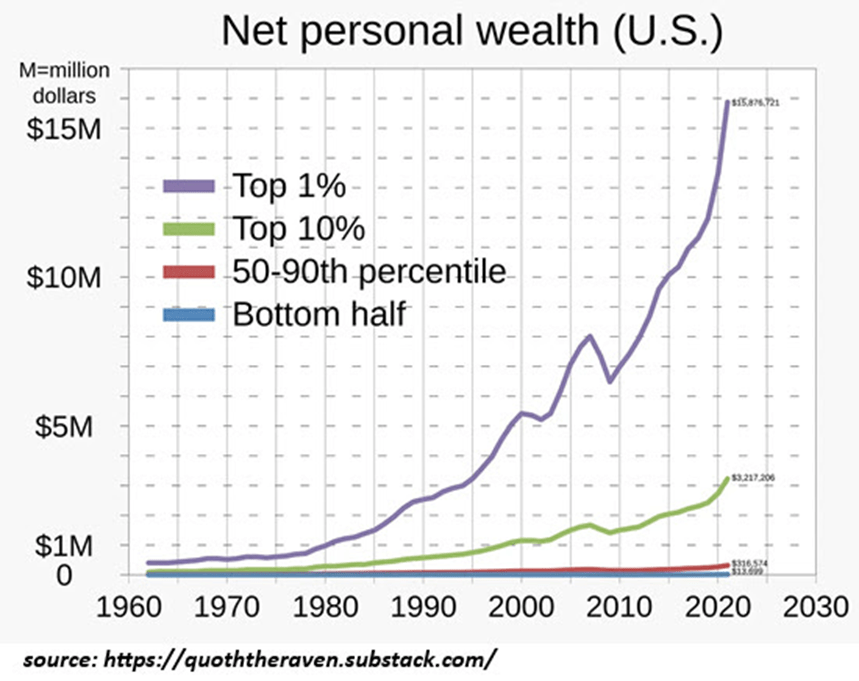
Extensive scholarship demonstrates that modern capitalist economies tend toward increasing concentration of wealth and income (Piketty 2014; Milanovic 2016). Two mechanisms are central to this process:
1.1 Concentration of Capital
Classical and contemporary political economists have emphasized the tendency of capital to accumulate and compound over time. Marx described this process as “the accumulation of capital” and “the concentration of the means of production” (Marx 1867). Later empirical work confirms that returns to capital often exceed the growth rate of the real economy (Piketty 2014), resulting in exponential expansion of wealth among capital-owning classes.
1.2 Centralization of Capital (Mergers and Acquisitions)
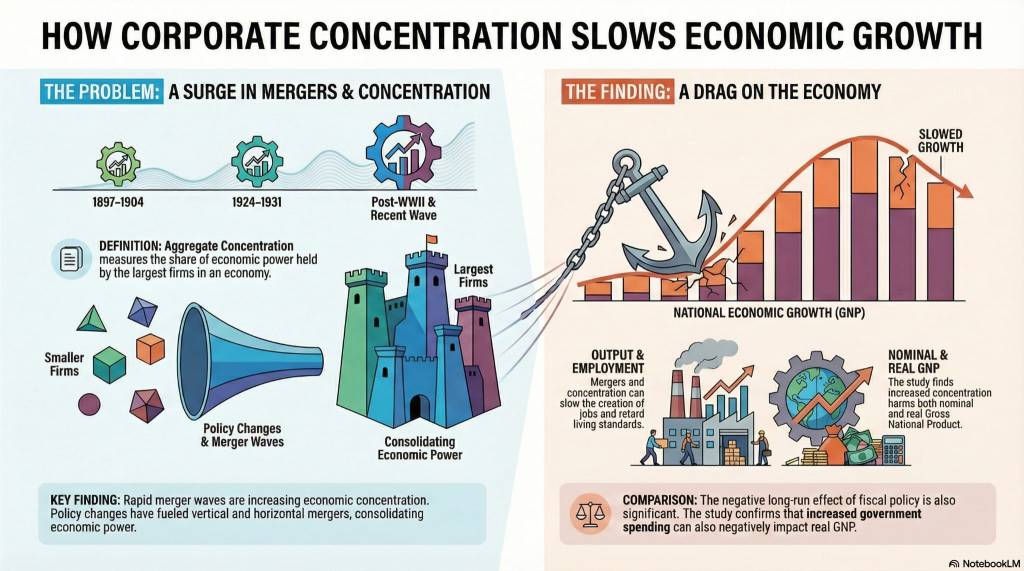
The second mechanism, identified by Marx as “centralization,” refers to the absorption of smaller firms by larger ones (Marx 1894). In the contemporary era, corporate mergers and acquisitions have intensified, reducing market competition and consolidating economic power (Stiglitz 2012; Philippon 2019). This dynamic is evident in rising market concentration across technology, finance, energy, and consumer goods sectors.
2. Political Inequality as a Reflection of Economic Inequality
Political inequality closely follows economic concentration. Elite influence over policy outcomes, campaign finance, and legislative priorities is well documented (Domhoff 2014; Page & Gilens 2017). Page and Gilens (2014) find that ordinary citizens have almost no independent impact on US policy outcomes, while economic elites and organized business interests wield substantial influence.
This pattern is not unique to the United States. Winters and Page (2009) argue that “oligarchic politics”—the disproportionate political influence of the wealthy—is a global feature of high-inequality capitalist systems. The political activities of billionaires such as Elon Musk or Bill Gates exemplify how extreme wealth translates directly into political agenda-setting power.
Historically, state interventions have moderated inequality only during exceptional periods, such as Franklin D. Roosevelt’s New Deal reforms (Katznelson 2013), including minimum wage in 1938. These interventions temporarily reversed inequality by regulating finance, empowering labor, and expanding welfare institutions.
3. The Neoliberal Era and the Acceleration of Inequality
Beginning in the late 1970s and early 1980s, advanced capitalist states—most notably the United States and United Kingdom—shifted toward neoliberal policies emphasizing deregulation, privatization, tax reductions for capital, and weakening of labor protections (Harvey 2005). Several policy changes were especially consequential for inequality:
3.1 Deregulation and the Erosion of Worker Protections
Neoliberal reforms reduced labor bargaining power, not raising minimum wage to keep up with inflation, and deregulated industries, contributing to wage stagnation and rising poverty (Hacker & Pierson 2010).
3.2 Legalization of Corporate Stock Buybacks (1982)
The Reagan administration’s reinterpretation of SEC Rule 10b-18 effectively legalized stock buybacks, transforming them into a dominant mechanism for increasing share prices without increasing productive output or creating any value (Lazonick 2014).
3.3 Privatization of Retirement Savings
The shift toward market-based retirement plans, such as 401(k)s, TIAA-CREF, channeled workers’ savings into financial markets, contributing to inflated stock prices while exposing workers to financial risk (Hacker 2019).
3.4 Expansion of the Military–Industrial Complex
Persistent increases in defense spending and continuous military engagements redirected public funds into private defense firms. Scholars argue that the modern defense sector operates as a structurally entrenched “permanent war economy” (Melman 2001; Bacevich 2010).
These neoliberal dynamics significantly accelerated the concentration of capital and political power.
4. Case Study: Iran — Post-Revolutionary Inequality and Neoliberal Transformation
Iran represents a paradoxical yet illustrative case. Despite the 1979 Revolution’s explicit rhetoric of social justice and protection of the Mostazafan (the oppressed), inequality has increased substantially. Scholars note that under President Rafsanjani (1989–1997), Iran adopted extensive and market-oriented reforms comparable to global neoliberal trends (Harris 2017; Maljoo 2020).
4.1 Privatization and Elite Accumulation
State assets were privatized, often through non-transparent processes that allowed politically connected elites—particularly those linked to state institutions, the clergy, and Guard—to acquire significant wealth (Keshavarzian 2007).
4.2 Financial Sector Expansion and Corruption
Iran’s rapidly expanding banking and finance sector facilitated lending scandals, mortgage crises, and institutional corruption, contributing to wealth concentration within elite networks (Salehi-Isfahani 2017).
4.3 Sanctions and Informal Oil Markets
US sanctions created lucrative opportunities for illicit or semi-regulated oil sales. Because these transactions were not fully reportable, large shares of oil revenue remained outside the formal state budget and were captured by military and political actors (Alamdari 2005).
Thus, despite anti-capitalist revolutionary ideology, Iran witnessed extreme capital accumulation by ruling elites.
5. Case Study: China — Mitigating Inequality Through Poverty Elimination
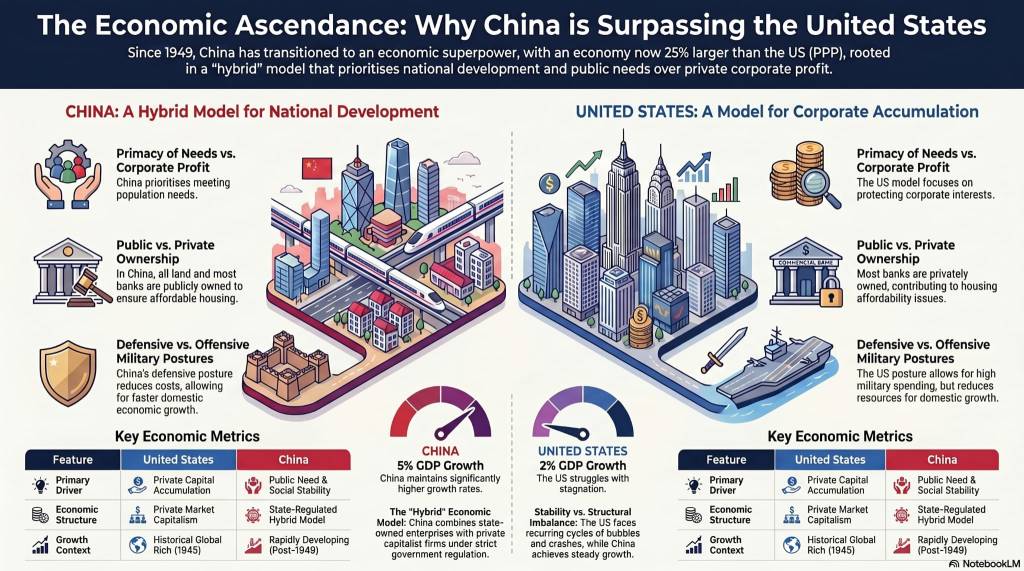
China presents a contrasting path. While its market reforms produced rising inequality during the 1980s–2000s (Xie & Zhou 2014), the state has maintained strong capacity to intervene in distributional outcomes. In 2021, China officially declared the eradication of rural poverty—a claim supported by independent assessments (World Bank 2021; Wang & Weaver 2022).
China’s state-led development strategy includes:
substantial public investment in rural infrastructure,
universalization of basic education and healthcare,
strict controls on land ownership,
and targeted poverty alleviation programs (Ravallion 2021).
While inequality persists, China has effectively eliminated destitution at the bottom of the distribution, in sharp contrast to the deepening poverty observed in many capitalist economies.
Conclusion
The concentration of capital and political power is not a phenomenon confined to the United States. It is a structural feature of capitalist development, observable across advanced, emerging, and hybrid economies. Comparative evidence from Iran and China illustrates that the pace and form of inequality are mediated by national institutions and state strategies, but the underlying dynamics remain global. Only deliberate and sustained state interventions—such as the New Deal or China’s poverty-elimination campaigns—have demonstrated the capacity to counteract these long-term tendencies.
Mohamad Shaaf, MBA, PhD,is Emeritus Professor of Economics at the University of Central Oklahoma. He is an empirical research analyst whose scholarly work spans a wide range of economic issues, employing Artificial Intelligence, dynamic programming, and advanced econometric modeling. His publications appear in numerous professional journals, and his scholarly record can be accessed via Google Scholarunder “Mohamad Shaaf.” He can be reached at mshaaf@uco.edu or drshaaf@gmail.com.
References
Alamdari, K. (2005). The power structure of the Islamic Republic of Iran. Third World Quarterly. Bacevich, A. (2010). Washington Rules: America’s Path to Permanent War. Domhoff, G. W. (2014). Who Rules America? Hacker, J. (2019). The Great Risk Shift. Hacker, J., & Pierson, P. (2010). Winner-Take-All Politics. Harvey, D. (2005). A Brief History of Neoliberalism. Harris, K. (2017). A Social Revolution: Politics and the Welfare State in Iran. Katznelson, I. (2013). Fear Itself: The New Deal and the Origins of Our Time. Keshavarzian, A. (2007). Bazaar and State in Iran. Lazonick, W. (2014). “Profits Without Prosperity.” Harvard Business Review. Maljoo, M. (2020). “Neoliberalism in Iran.” Middle East Critique. Marx, K. (1867, 1894). Capital, Vols. I–III. Melman, S. (2001). After Capitalism: From Managerialism to Workplace Democracy. Milanovic, B. (2016). Global Inequality. Page, B., & Gilens, M. (2014). Testing Theories of American Politics. Page, B., & Gilens, M. (2017). Democracy in America? Philippon, T. (2019). The Great Reversal. Piketty, T. (2014). Capital in the Twenty-First Century. Ravallion, M. (2021). “Has China Eliminated Extreme Poverty?” Journal of Economic Perspectives. Salehi-Isfahani, D. (2017). “Poverty and Inequality in Iran.” Stiglitz, J. (2012). The Price of Inequality. Wang, X., & Weaver, C. (2022). “Assessing China’s Poverty Eradication.” Winters, J., & Page, B. (2009). “Oligarchy in the United States.” World Bank. (2021). China Poverty Assessment. Xie, Y., & Zhou, X. (2014). “Income Inequality in Today’s China.” PNAS.